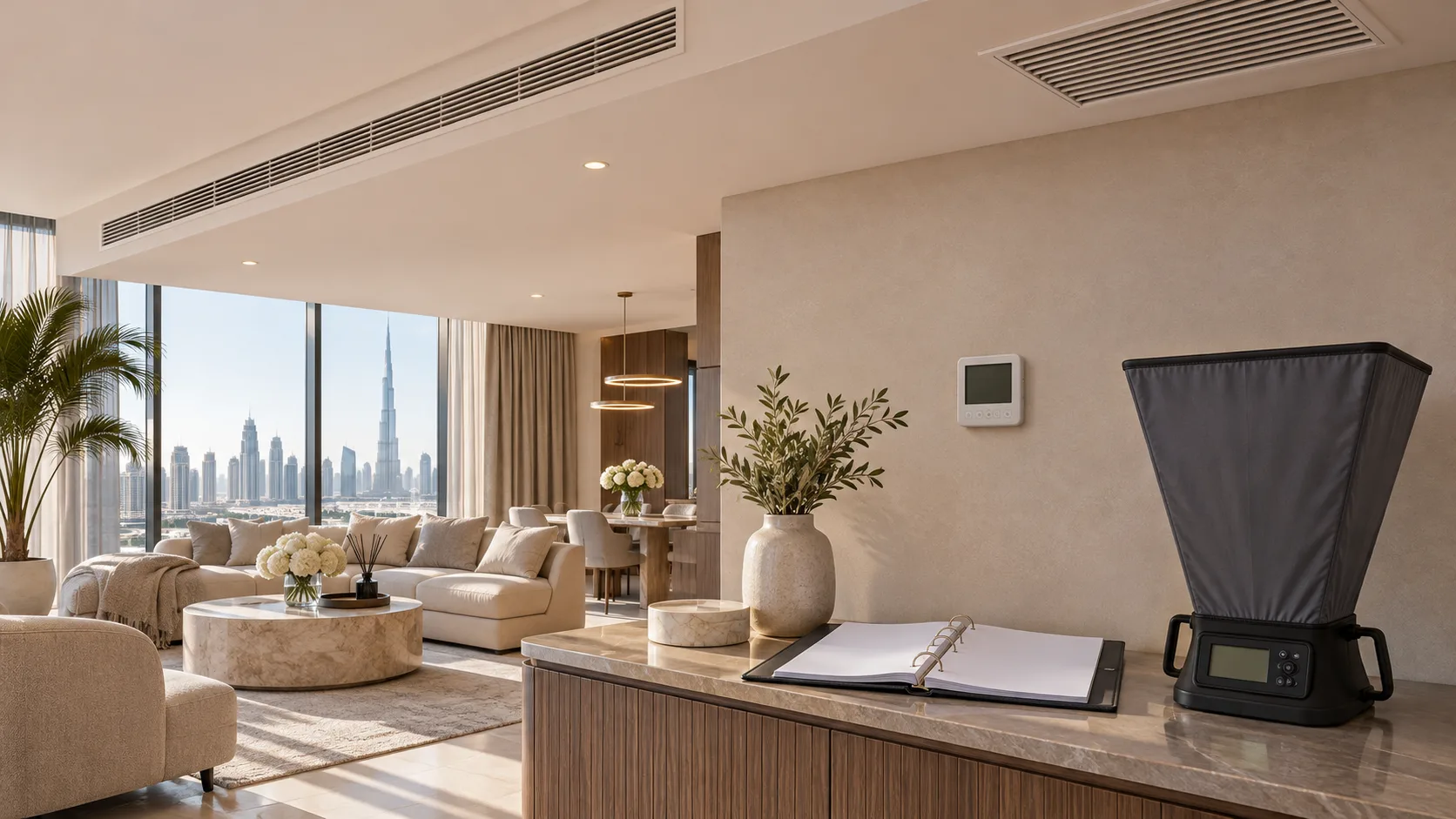
Direct answer: treat move-in readiness as a coordinated release
A useful post-renovation cleaning and ventilation brief should define when dust-producing work ends, which areas and systems are included, how protection and debris are removed, what cleaning method applies to each finish, who checks air-conditioning filters and grilles, how ventilation is operated, what evidence is recorded and who authorises occupation. It should separate construction cleaning, specialist surface care and ordinary household cleaning. A polished floor and a pleasant scent do not prove that concealed dust sources, damp materials, blocked grilles or unsuitable cleaning chemicals have been addressed. The release should follow an inspection, not an assumption that the last visible trade has finished.
Build the brief around four readiness tests
Use four tests: source control, cleaning, ventilation and verification. Source control asks whether cutting, sanding, touch-ups and unpacking are genuinely complete and whether wet materials or leaks remain. Cleaning covers high and low surfaces, joinery interiors, fittings, glazing, ledges and protected zones. Ventilation defines how the property systems and safe outdoor-air routes are used in line with the appointed specialist and product guidance. Verification records condition, filters, odour, visible residue and unresolved observations. The US Environmental Protection Agency places source control, ventilation and air cleaning in that order when discussing indoor environmental concerns during remodelling; the project brief should translate those principles into a property-specific handover sequence.
Close dusty work before final cleaning starts
List every remaining activity that can create particles or emissions: drilling, sanding, sealant work, paint touch-ups, stone polishing, joinery adjustment, packaging removal and external dust tracked through the home. Agree a cut-off and a re-clean rule if later work resumes. Remove loose waste and temporary protection in a planned sequence so dirt is not transferred back onto finished areas. Check tops of doors, cabinet interiors, light recesses, window tracks, return-air grilles and other places that a quick visual inspection misses. If there is suspected hazardous material, unusual contamination or a persistent moisture problem, stop and obtain competent specialist advice; ordinary final cleaning is not a substitute for investigation or remediation.
Match cleaning methods to the exact materials
Create a finish schedule that links each installed surface to current care guidance. Stone, engineered boards, timber, metal coatings, sanitaryware, glass, paint and specialist fabrics can have different limits for pH, abrasives, steam, solvents and standing water. Record the approved cleaner, dilution where the manufacturer states one, application tool and excluded products without turning the schedule into a homeowner experiment. Keep unlabelled chemicals off site. Trial any uncertain method on an approved sample or inconspicuous area only under the supplier or specialist route. Photograph pre-existing marks and construction damage before cleaning so cleaning does not erase the evidence needed for a proper defect decision.
Planning example
Planning example: a renovated two-level home is nearly complete, but cabinet adjustments and paint touch-ups are still scheduled after the first deep clean. The project lead postpones the move-in release, finishes the dusty and wet tasks, then arranges a second controlled clean. The air-conditioning specialist checks accessible filters and grilles, the finish schedule identifies separate care methods for stone, timber and coated joinery, and windows are operated only within the agreed safe ventilation plan. A room-by-room record closes visible dust and odour observations before belongings arrive. This fictional scenario demonstrates sequencing; it is not an air-quality certification or a claim about a completed project.
Define ventilation and filter responsibilities
Record which mechanical systems are commissioned, which filters are installed, their references and condition, and who is authorised to inspect or replace them. Agree whether doors or windows can be opened safely and how outdoor heat, humidity, dust, security and building rules affect that decision. The EPA advises providing ventilation during and after work likely to release pollutants, but any duration or operating mode must follow the actual products, property systems and professional advice. Dubai public-health legislation addresses cleaning and indoor-air ventilation within the built environment, while the applicable standards and responsible entity depend on the property. Do not improvise duct cleaning, equipment settings or filtration upgrades without the relevant specialist.
Checklist before the move-in release
Use one dated checklist and keep observations separate from conclusions. Photograph representative rooms and any item left open, then assign every exception rather than hiding it in a general snag list.
- Confirm all dust-producing and wet-finish work is complete
- Remove waste, packaging and temporary protection in sequence
- Clean high surfaces, ledges, tracks, grilles and joinery interiors
- Match cleaning methods to current material-care guidance
- Record filter references, condition and responsible specialist
- Agree the property-specific ventilation method and restrictions
- Check for persistent odour, visible residue, dampness or leaks
- Protect cleaned areas from return visits and deliveries
- Issue unresolved observations with an owner and due date
Limitations and specialist boundaries
This brief cannot certify indoor air quality, diagnose illness, prove that a material has fully cured, assess mould, clean contaminated ducts, commission mechanical systems or decide whether hazardous substances are present. Those matters require appropriately qualified professionals, suitable testing and the correct authority or building route. Portable consumer monitors can support observations but do not replace professional assessment. Outdoor conditions also change, so a single reading or absence of odour is not conclusive. If occupants have health sensitivities, the project team should obtain relevant professional advice before occupation rather than making a general assurance from visual cleaning.
Next step: issue a room-by-room readiness record
Combine the finish-care schedule, cleaning scope, ventilation note, filter record and room checklist into one dated release pack. Walk the property with the project lead, cleaner and relevant services representative. Mark each room ready, conditionally ready or not ready, and state the evidence needed to close every condition. Retain product data, filter references and photographs with the handover information so future cleaning does not rely on memory. Once the authorised parties accept the record, schedule furniture delivery and move-in without reopening completed areas for avoidable touch-ups or unplanned installation work.
Sources & further reading
Make this useful for your project.
A review of your property and priorities can turn general guidance into a defined brief.
Explore our servicesDiscuss your project