The direct answer
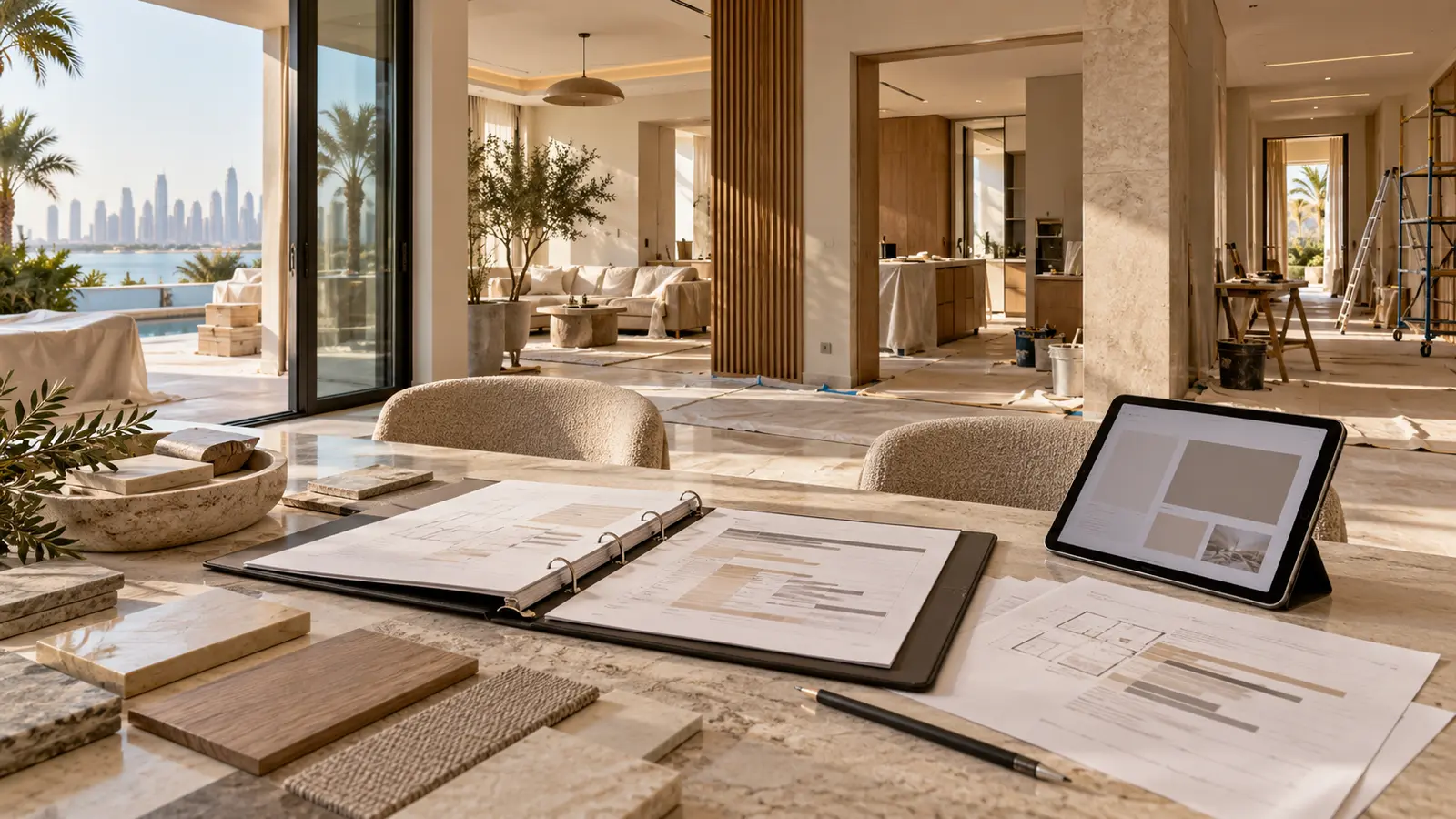
A useful whole-property renovation progress-meeting pack should make five things visible before anyone enters the room: what was planned, what has actually been completed, what evidence supports that status, which interfaces are blocked, and which decisions are due next. It is not a photographic diary or a long list of conversations. It is a compact control document that lets the owner, project lead and relevant specialists work from the same current information. The best pack is issued in advance, updated during the meeting only where necessary, and reissued with named actions and dates. That rhythm is especially valuable when several rooms and specialist packages must converge into one handover.
Start with a one-page exception view
The opening page should answer the owner’s most important question: what needs attention now? Show the reporting period, the current programme milestone, a short overall status, and only the material exceptions. A useful exception is specific enough to act on. “Joinery delayed” is weak; “wardrobe setting-out cannot close until socket positions are approved by Tuesday” identifies the dependency and deadline. Use the same status language at every meeting, such as on track, at risk, blocked and complete. Define what each term means so that a green status is not based on optimism. The pack may then expand into detail, but the first page should allow a reader to understand the project’s present condition in minutes.
- Current milestone and reporting cut-off date
- Top programme, quality and access exceptions
- Decisions required before the next meeting
- Changes awaiting formal review
- Inspections or samples that could block following work
Report progress against a defined baseline
Progress percentages can mislead when they are not tied to measurable work. Instead, organise the update by area and work package, then compare planned and actual milestones. For each line, show the previous status, current status, evidence date and the next release condition. Evidence might be an agreed inspection record, a dated site photograph, an approved sample or confirmation that a coordinated drawing has been issued. Keep forecast dates separate from confirmed completion dates. If the programme has been formally revised, identify the revision and date rather than silently moving the target. This gives the team a stable reference while still acknowledging approved changes.
Make interfaces a standing agenda item
Whole-property work is vulnerable at the boundaries between packages: cabinetry and power, waterproofing and finishes, ceilings and access panels, glazing and surrounding surfaces, or indoor work and external drainage. The pack should therefore contain an interface table rather than leaving coordination to separate trade updates. Give each interface one owner, a required information date and a release condition. If a specialist decision is needed, record what information they must receive and who will supply it. The meeting should not attempt to improvise technical solutions without the right review. Its job is to expose the dependency early, direct it to the responsible party and protect following work from premature closure.
Separate information, decisions and formal changes
Three lists prevent most meeting records from becoming ambiguous. The information-request list records a question, the exact response needed, who must answer and when. The decision list records options already supported by enough information for the owner or designated approver to choose. The change list records proposed departures from the agreed scope or design and points to the formal assessment of cost and time. A topic can move from one list to another, but it should not occupy all three without clear references. This separation also prevents a casual meeting comment from being treated as approval to manufacture, remove or install something.
- Give every item a stable reference number
- Record the originator and date raised
- State the required response, not only the topic
- Identify the approver and the consequence of a late answer
- Close items with a document or decision reference
Planning example
Planning example: a fictional whole-property project is approaching ceiling closure upstairs while fitted storage is being set out downstairs. The draft pack shows both as on track, but the exception review reveals two dependencies. A ceiling access location awaits confirmation from the relevant service specialist, and a media cabinet cannot be finalised until retained equipment is measured. The meeting does not redesign either item. It assigns the ceiling response to the specialist for Monday, the equipment inventory to the owner for Tuesday, and a coordinated drawing update to the designer for Thursday. The affected areas remain marked blocked until those referenced outputs arrive. The programme view then shows which following tasks can continue elsewhere. One short chain of actions is more useful than several pages stating that coordination was discussed.
Checklist for the issued pack
Before circulation, check that the pack can be understood by someone who did not attend the previous meeting. Remove duplicated photographs and commentary that no longer affects a decision. Confirm that dates use one convention, actions have one owner, and overdue items retain their original due date as well as any revised commitment. Mark superseded drawings or schedules clearly. Where photographs are used, add the area, date and purpose; an unlabelled image is not reliable evidence. Finally, check that sensitive account details, private contact information and unrelated commercial material are not included in a broadly circulated pack.
- Issue number, reporting period and meeting date are clear
- Programme baseline and current forecast are distinguished
- Every blocker has an owner and next action
- Quality evidence links to the relevant area or package
- Decision and change references match their formal registers
- Previous actions are closed, carried forward or escalated
- The next two reporting periods are visible
Limits and the next step
A progress pack does not replace the contract, approved technical information, specialist design, inspection records or statutory and building-management requirements. It summarises and connects those sources; it should never quietly rewrite them. The level of detail must also match the project. A smaller property may need a concise pack, while a multi-package renovation may require appendices managed by different leads. The next step is to agree the template, status definitions, reporting cut-off and issue route before active work begins. Populate the first pack from the current programme, decision schedule, risk register and inspection plan, then test whether every item discussed can end with evidence, an owner or a formally routed decision.
Sources & further reading
Make this useful for your project.
A review of your property and priorities can turn general guidance into a defined brief.
Explore our servicesDiscuss your project